How a Counterintelligence Inquiry Into Trump’s Russia Ties Was Derailed
For the past year, the Trump administration has pursued efforts to retaliate against intelligence officials and FBI agents who investigated Russia’s interference in the 2016 presidential election. Federal prosecutors in South Florida have been leading those efforts as they try to build a criminal case

How a Counterintelligence Inquiry Into Trump’s Russia Ties Was Derailed
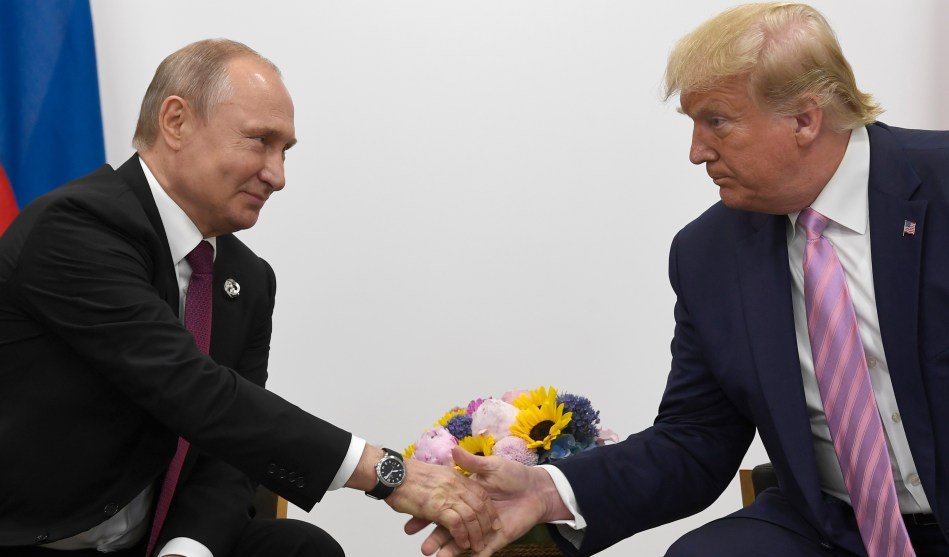
Documents released by the White House have shed new light on the fate of an often-overlooked FBI investigation launched in 2017 into President Donald Trump’s ties to Russia.
By Michael S. Schmidt
For the past year, the Trump administration has pursued efforts to retaliate against intelligence officials and FBI agents who investigated Russia’s interference in the 2016 presidential election. Federal prosecutors in South Florida have been leading those efforts as they try to build a criminal case.
In recent weeks, however, the White House has added another element to its campaign to reshape the history of the Russia investigation. It released a large collection of previously classified FBI memorandums that it says support President Trump’s claims that a so-called “deep state” was targeting him.
The documents contain little that is substantially new, and they do not fundamentally undermine the FBI’s reasoning for opening the Russia investigation.
But they do provide new details about an often-overlooked part of the events surrounding Mr. Trump during the first months of his presidency in 2017: the FBI’s decision to launch a separate counterintelligence investigation into the president himself, and how that investigation was derailed before it had much opportunity to develop.
Mr. Trump has repeatedly dismissed as baseless political smears the suggestion that he was a Russian asset or had extensive financial ties to Russia. No publicly known investigation has ever established that Mr. Trump was acting at the direction of the Russian government.
Here is what the newly released documents and interviews with former federal law-enforcement officials reveal about what happened.
The FBI Launched a Two-Pronged Investigation
Although the scrutiny of Mr. Trump at the time became widely known as the “Russia investigation,” there were actually several separate investigations.
During the 2016 presidential campaign, the FBI opened an investigation into whether the Trump campaign was working with the Russian government as Moscow interfered in the election in an effort to damage Hillary Clinton.
That investigation, known as Crossfire Hurricane, was not focused directly on Mr. Trump’s personal conduct or his individual ties to Russia.
But in May 2017, about a week after Mr. Trump fired FBI Director James B. Comey, senior FBI officials and counterintelligence agents decided to move forward with a two-pronged investigation. Its unusual code name was Oxferd Comma.
One part of the investigation was criminal. It was intended to determine whether Mr. Trump had broken the law by firing Mr. Comey, obstructed justice or interfered with the FBI’s investigation into Russian election interference. It would also examine whether the Trump campaign had conspired with Russia.
The second part was a counterintelligence investigation into Mr. Trump’s ties to Russia.
Counterintelligence investigations differ from criminal investigations. Rather than focusing only on whether a crime has been committed, they examine whether a foreign adversary is attempting to undermine the United States.
Such investigations are classified and conducted secretly. They can continue for years and, in some cases, for more than a decade.
Civil-liberties advocates have criticized counterintelligence investigations because they can uncover embarrassing conduct that is not necessarily criminal. People are rarely charged in such cases, but the FBI may take steps to warn officials or private citizens that people around them could be attempting to influence them on behalf of a foreign power.
One of the declassified memorandums released by the White House last week described the purpose of the investigation this way:
“The goal of the investigation is to determine if President Trump is or was directed by, controlled by, and/or coordinated activities with, the Russian Federation in a manner constituting a threat to the national security of the United States and/or a violation of federal criminal statutes.”
Comey’s Firing Helped Prompt the Investigation
According to the memorandums released by the White House, the FBI had concluded that the Russian government interfered in the 2016 election to help Mr. Trump.
The bureau had learned that Russians had offered assistance to the Trump campaign. The FBI also knew that the Trump campaign had pressured the Republican Party to adopt a much more Russia-friendly position on Ukraine in its 2016 platform.
The FBI further knew that, before firing Mr. Comey, Mr. Trump had pressured him to end the investigation into possible ties between his campaign and Russia.
The bureau was also concerned about Mr. Trump’s personal and business history.
The memorandum opening the investigation stated that publicly available information indicated that Mr. Trump had maintained longstanding business and real-estate ties to Russia and former Soviet states dating back to the 1980s.
In 2008, Mr. Trump’s son had said that Russians represented a “disproportionate cross-section” of many of his father’s assets.
Publicly available information also indicated that Mr. Trump had business relationships in the United States and Russia with several named Russian oligarchs.
Whether this information was sufficient to justify opening a counterintelligence investigation remains at the center of the long-running dispute between Mr. Trump’s allies and the FBI officials who authorized the inquiry.
Mr. Trump has consistently argued that his personal, business and financial connections to Russia were minimal.
FBI agents, however, wanted to conduct a broad investigation into whether Mr. Trump had fired Mr. Comey in an attempt to stop the Russia investigation and whether he was trying to conceal any ties he might have had to Russia.
James Baker, the FBI’s general counsel at the time, told Congress that the obstruction itself could damage the bureau’s ability to determine what Russia had done, creating a potential national-security threat.
A Special Counsel Is Appointed
On the day the Oxferd Comma investigation was opened, Acting FBI Director Andrew G. McCabe briefed Deputy Attorney General Rod J. Rosenstein about the bureau’s decision.
The following day, Mr. Rosenstein made another extraordinary decision: He appointed former FBI Director Robert S. Mueller III as special counsel to investigate Mr. Trump and his presidential campaign.
What was not known at the time was that Mr. Rosenstein’s appointment of Mr. Mueller effectively brought the counterintelligence investigation to an end.
Mueller’s Criminal Investigation Derailed the Counterintelligence Inquiry
When Mr. Rosenstein appointed Mr. Mueller, he authorized the special counsel to conduct criminal investigations into Russia’s interference in the 2016 election, possible ties between the Trump campaign and Russia, and whether Mr. Trump had attempted to obstruct the investigation.
But Mr. Rosenstein did not authorize Mr. Mueller to conduct the separate counterintelligence investigation into Mr. Trump.
He also made clear that he did not want Mr. Mueller to conduct an open-ended investigation that could continue for years.
Mr. Mueller interpreted his mandate as being focused primarily on criminal matters.
Although Mr. Rosenstein did not authorize Mr. Mueller to conduct the counterintelligence investigation, responsibility for overseeing that investigation was transferred to FBI agents working with Mr. Mueller’s team, according to the memorandums later released by the White House.
Because the special counsel’s mandate focused on criminal matters, however, the counterintelligence investigation gradually fell by the wayside.
One memorandum said the counterintelligence work became “limited to activities within the scope of the special counsel’s jurisdiction.”
When Mr. Mueller’s report was released in 2019, it concluded that the investigation had found no evidence that Mr. Trump or his campaign had conspired with Russia during the 2016 election.
However, Mr. Mueller declined to reach a definitive conclusion about whether Mr. Trump had obstructed justice.
The report also did not include a separate section examining Mr. Trump’s personal ties to Russia, whether he had been compromised by Russia or whether he represented a counterintelligence threat.
Shortly after the report was released, Mr. Mueller testified before Congress. Under questioning, he acknowledged that his investigation had not examined whether Russian oligarchs had laundered money through Mr. Trump’s businesses.
In another exchange, Mr. Mueller acknowledged that his investigation had focused on criminal conduct. His testimony appeared to leave open the possibility that a separate counterintelligence investigation might still have been underway.
Mr. Mueller gave that testimony on July 24, 2019.
But the memorandums released by the White House last week revealed that the counterintelligence investigation had actually been closed more than three months earlier.
The documents therefore provide a clearer picture of how an FBI investigation into whether the president himself posed a potential counterintelligence threat was launched in 2017—and how that investigation was effectively sidelined after the appointment of a special counsel whose mandate was primarily focused on criminal offenses.
Source: The Newyork times